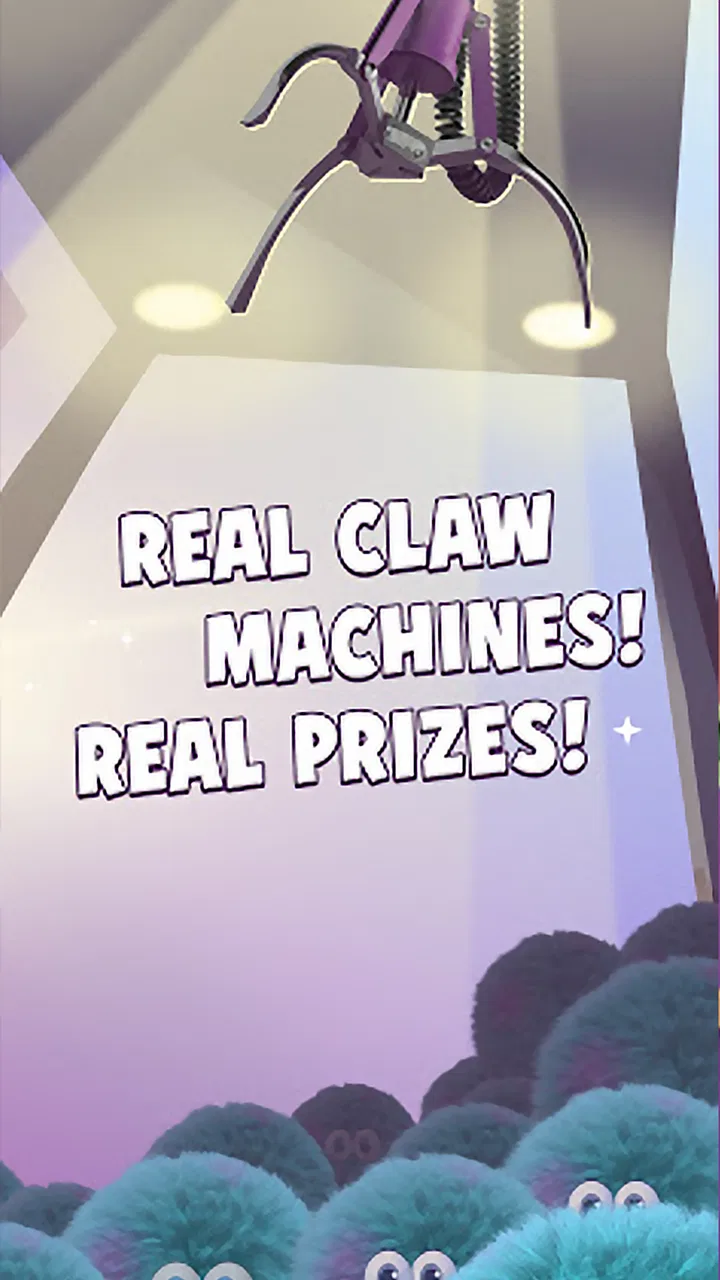
Clawee - Real Claw Machines
- 4.3
- Rating
- 10.00M
- Installs
- Free
- Price

 Analysis by App-foxy
I approached Clawee as a casual arcade game rather than as a traditional mobile prize app. Its main appeal is the feeling of operating a real claw machine from a phone, with the possibility of winning physical prizes and having them delivered. That idea is more distinctive than a standard digital claw game, but it also creates expectations that deserve a careful look: the experience depends on connection quality, timing, patience, and how comfortable you are spending money on repeated attempts.
In my experience, the game is easiest to enjoy when I treat each machine as a short entertainment session, not as a dependable way to obtain a particular item. The free entry point makes it approachable, and the Everyone rating keeps it suitable for a broad audience. At the same time, the prize-focused design can make a losing attempt feel more significant than losing a round in an ordinary arcade game.
What using Clawee feels like in practice
Clawee is an arcade game from Gigantic Connected Reality Arcade Ltd., released on August 27, 2018. It has grown into a widely used title, with more than 10 million installs, an average rating of 4.3 from roughly 230 thousand ratings, and about 54 thousand written reviews. Those figures suggest that the real-machine concept has found a substantial audience, although popularity does not remove the practical issues that can affect an individual session.
You May Also Like

 Blood Strike: 2.5 Anniversary
Blood Strike’s Loadouts Turn Every Drop Into a Tactical Gamble
A close look at Blood Strike’s custom loadouts: how fast access to signature weapons reshapes its battle royale rhythm, rewards preparation, and narrows the gap between fights.

 Pandora - Music & Podcasts
Pandora’s Music Is Easy to Start, but Harder to Recover
Pandora’s strength is its low-effort path from a seed to a station. Its weak spot is how much confidence it asks you to place in connection, setup, and quiet recovery.

 8 Ball Pool
 Is Built on Rivalries, Rematches, and Routine
A close look at the rivalries, rematches, shared routines, and unanswered safety questions that turn a quick pool match into a persistent mobile community.

 Samsung Music
’s Quiet Strength Is Playing What You Already Own
Its reach comes less from spectacle than from dependable access to a personal library. That simplicity is both the app’s strongest retention engine and its ceiling.

 AccuWeather: Weather Radar
AccuWeather Review: A Quick, Clear Forecast for Everyday Decisions
For everyday plans, the best forecast is the one you can understand quickly. AccuWeather makes rain timing, radar, and local conditions easy to act on, with a few trade-offs.

 Hill Climb Racing
Why Hill Climb Racing Still Turns Crashes Into One More Run
A tiny car, a bumpy hill and one more upgrade: Hill Climb Racing keeps resurfacing because its simple chaos makes every near-miss feel personal.
More From Our News Desk



The basic attraction is immediate. Instead of guiding a purely animated claw across a fixed digital board, I am interacting with the idea of a physical machine remotely. That gives each move more tension because the result feels less like a conventional level and more like a small attempt at a real arcade cabinet. The game works best for people who enjoy that suspense and do not need every session to produce a prize.
The important distinction is between the entertainment value of playing and the value of the object being pursued. If I open the game because I want a relaxing few minutes of timing and decision-making, a failed grab is part of the fun. If I open it with one specific prize in mind and expect to secure it quickly, the same failure becomes frustrating. That difference should shape how you use it from the first session.
Where new players commonly get stuck
The first point of friction is usually not the claw itself. It is understanding the rhythm of a remote attempt. A player may expect an instant, perfectly responsive game, but any delay between an input and what appears on screen can make a carefully timed move feel inaccurate. I found it useful to judge the machine’s response during an early, low-pressure attempt rather than immediately committing to a difficult grab.
Another source of confusion is the difference between seeing a prize and having a realistic chance of lifting it. A visible item may be near the chute but positioned awkwardly, pressed against another object, or turned in a way that makes the claw’s grip less useful. The best target is not always the most attractive one. Watching the way objects move during an attempt can reveal whether the machine is better suited to nudging, repositioning, or lifting.
There is also a psychological trap. Because the game connects attempts with real prizes, it is easy to continue after a near miss simply because the next try feels as if it should finish the job. I recommend deciding on a personal stopping point before spending anything. A near miss is information about the position, not proof that success is guaranteed on the following turn.
For younger players, the Everyone age rating makes the game broadly accessible, but that does not mean every part of the experience should be left without supervision. The prize angle and optional purchases are worth explaining clearly to children. A simple rule—play with the available free opportunity first and ask before any purchase—prevents the most avoidable disappointment.
Setup checks that prevent avoidable frustration
Before blaming a machine for a poor result, I would check the basics. The game requires Android 8.0 or later, so an older device may not provide a suitable starting point. On a compatible phone, I would close demanding background apps, use a stable connection, and avoid switching repeatedly between Wi-Fi and mobile data during a session. These steps do not change the machine, but they can make the visual feedback easier to follow.
A stable connection matters more here than it does in a turn-based puzzle. With a normal offline arcade title, a brief interruption may only pause the action. In Clawee, timing and visual response are connected, so a momentary disruption can make an input feel late or leave the player unsure whether it registered. I prefer to play when the connection is steady rather than treating the game as something to launch during every passing signal gap.
It is also sensible to prepare the account and device before beginning a serious session. Keep the application updated through the normal platform process, make sure the phone has enough free space for routine operation, and avoid starting a prize-focused attempt while the device is overheating or heavily throttled. These are ordinary checks, but they are especially useful when the game’s appeal depends on responsive remote control.
The current version is 10.1.3.1381.0. I would use that version information mainly as a troubleshooting reference: if the app behaves differently after an update, note the version before trying several unrelated fixes. That creates a clearer record of what happened and avoids changing too many things at once.
Because the game is free to start but offers in-app purchases ranging from $0.99 to $399.99 per item, I would also check the purchase controls on the device before handing it to a child or allowing casual play. The upper end of that range is substantial, so a spending boundary is not an optional detail. Free access is a good way to decide whether the remote-machine format suits you, but it should not be confused with unlimited attempts at no cost.
A more disciplined way to choose and play
My most useful adjustment was to separate observation from commitment. On a new machine, I would first look at the prize layout, notice whether objects are tightly packed, and identify whether the claw has a clear route to the target. This is more effective than immediately chasing the most visible item. A short observation phase can prevent spending attempts on a position that needs to be changed first.
When an object is poorly placed, the practical goal may be to improve its position rather than win it immediately. A controlled nudge toward an open area can be more valuable than a dramatic grab that slips away. This approach requires patience, because the first successful move may not look like progress. It is still progress if it leaves the prize easier to approach on the next attempt.
I would also keep a simple mental record of what the claw actually did. Did it close around the object but lose it while lifting? Did it touch the prize without changing its position? Did the input appear to happen later than expected? Each answer points to a different decision. Repeating the same move after the same result is usually less useful than changing one variable at a time.
Another practical tip is to avoid making a purchase while frustrated. The game’s arcade tension is designed around another attempt, and that can encourage impulse decisions after a near miss. If I feel annoyed rather than entertained, I stop and return later. This protects the entertainment budget and makes it easier to judge whether I actually want to continue.
For a family setting, I would make the workflow explicit: an adult chooses whether purchases are allowed, the child can help inspect the machine and plan the move, and everyone accepts that a prize is not guaranteed. That turns the game into a shared timing activity instead of an argument about why another attempt is necessary.
Recovering when a session goes wrong
If the picture freezes, an input seems unresponsive, or the session behaves strangely, I would begin with the least disruptive recovery steps. Wait briefly to see whether the connection catches up, then check the network without rapidly tapping the control repeatedly. Repeated inputs can make it harder to understand whether the original action was delayed or duplicated.
If the application closes or returns to an unexpected state, reopen it calmly and check what the game shows before starting another attempt. I would not immediately spend again just to test whether the problem has disappeared. First confirm that the screen is responding normally and that the device connection is stable. This is particularly important when the previous attempt ended during a moment of uncertainty.
Restarting the app can help with a temporary session problem, while restarting the phone is a reasonable next step if other applications are also behaving poorly. I would avoid clearing storage or reinstalling as an opening move, because aggressive resets can create additional account or setup work. Use more disruptive measures only after simple checks fail and only when you understand what information may need to be entered again.
If a problem repeats, record the useful details: the device, operating system, connection type, what appeared on screen, and whether the issue happened before or during an attempt. A clear description is more helpful than saying only that the game “did not work.” It also helps separate a one-time network interruption from a repeatable application problem.
Most importantly, do not treat a technical interruption as a reason to keep making purchases. Pause the session until the controls and connection feel normal. The safest recovery workflow is the one that protects both your time and your spending while you work out what happened.
When the app may not be the real cause
Not every disappointing result indicates a malfunction. A claw can move correctly and still fail to secure an item because the target is badly aligned or the grip is not centered. Likewise, a visible delay may come from a weak connection or an overloaded device rather than from the game’s controls. Looking at the whole chain—phone, network, display, input, and machine—gives a more realistic diagnosis.
Screen size can matter to comfort even when it does not prevent play. On a small phone, judging the exact relationship between the claw and a compact prize may be more difficult. A larger screen can make observation easier, but it cannot turn an unfavorable position into a favorable one. I would solve visibility problems before assuming that the machine is unusually difficult.
Expectations are another frequent cause of dissatisfaction. Clawee is not the best choice if you want a predictable progression system, guaranteed rewards for time spent, or a purely skill-based arcade challenge with no physical-prize element. A conventional claw game may be better for quick, consequence-free practice, while a standard arcade title may be better when you want clear levels and repeatable rules.
On the other hand, ordinary alternatives do not reproduce the same remote-machine feeling. If the possibility of receiving a physical prize is central to the appeal, a normal digital claw game can feel flat after a few sessions. Clawee’s strength is precisely that added sense of consequence, provided you are comfortable with uncertainty and optional spending.
Who will enjoy it, and who should skip it
I would recommend Clawee to players who like short arcade sessions, enjoy watching a plan develop, and can regard a failed grab as part of the entertainment. It also suits friends or families who want to discuss which target looks most achievable and share the excitement of a real-world result. The free starting point makes it easier to test that fit before deciding whether the format is worth further attention.
I would be more cautious recommending it to anyone who is easily drawn into “one more try” spending. The purchase range means that self-control matters, especially when a prize seems close. Players who need a guaranteed outcome for every payment, or who dislike connection-dependent timing, will probably be happier with an offline arcade game.
It is also not my first choice for someone seeking deep long-term progression. The appeal is concentrated in the individual machine, the target, and the tension of the attempt. If your ideal game is built around story, character development, competitive rankings, or extensive strategy systems, this is a narrower experience.
My practical verdict after using it
Clawee is a clever take on the arcade category because it makes the claw-machine idea feel more immediate than a conventional simulation. I like it most when I approach it as a controlled, occasional activity: inspect the target, make a measured attempt, learn from the result, and stop while the session is still enjoyable. That workflow brings out the game’s personality without letting the prize chase dominate the experience.
The main friction is not that the concept fails; it is that the concept raises the cost of uncertainty. A weak connection, a rushed decision, or an unrealistic expectation can make a short arcade session feel disproportionately irritating. The practical safeguards are simple: use a compatible and stable device, check the connection, begin with observation, set a spending limit, and pause when the app or the controls behave unexpectedly.
For me, the free entry and Everyone rating make it worth trying, while the optional purchases mean it deserves a more deliberate approach than a typical casual game. The developer’s current release is a good fit for curious players who want the tension of remote claw machines and understand that a prize is never the same thing as a guaranteed reward.
My bottom line: Clawee is most enjoyable as occasional arcade entertainment with a physical-prize twist, not as a reliable shopping method or a replacement for a full-featured game. Try it without spending first, learn how the machines respond, and decide whether the experience itself—not just the hope of winning—is worth returning for.
FAQs for Clawee - Real Claw Machines
01What is Clawee - Real Claw Machines?
Clawee is a mobile game that lets you control real claw machines through live video from your Android or iOS device. You choose a machine, try to grab a prize, and watch the result through the camera feed. If you win, Clawee may ship the physical prize to you, making the experience different from a standard virtual arcade game.
02Is Clawee free to download and play?
Clawee can generally be downloaded for free, but playing the machines usually involves in-app credits or tokens. New users may receive limited bonuses, while additional attempts can require purchases or participation in promotional offers. Before spending money, check the current pricing, available packages, and any subscription or recurring-payment terms shown in the app.
03How do prizes and shipping work in Clawee?
When you successfully win a physical prize, it is normally added to your in-app prize collection and can be requested for delivery, subject to Clawee’s current rules. Shipping availability, delivery fees, eligible countries, processing times, and prize limitations may vary. Review the redemption and shipping information carefully before attempting to collect a prize.
04Does Clawee use real claw machines or is it only a simulation?
Clawee is designed around remotely operated, physical claw machines rather than a purely simulated arcade. The app provides a live view and lets you control the machine over the internet. However, connection quality, camera delay, machine settings, and the difficulty of each prize can affect the experience, so winning is not guaranteed on every attempt.
05What should I check before downloading and using Clawee?
Before downloading Clawee, check whether the app is available in your country and whether prize delivery is supported in your location. You should also review its age rating, privacy policy, permissions, in-app purchase details, refund rules, and terms for prize redemption. A stable internet connection is recommended because gameplay depends on remote video and controls.
Pros
- Play real claw machines remotely from your phone.
- Wide selection of prizes and machines to choose from.
- Winning items are shipped directly to your home.
- Live gameplay makes each attempt feel authentic.
- Regular events and promotions can add extra excitement.
Cons
- Each play costs credits
- which can become expensive over time.
- Prize availability and machine quality may vary.
- Claw strength and positioning can make wins unpredictable.
- Shipping times may be lengthy depending on your location.
- Some features and extra credits require in-app purchases.

Clawee - Real Claw Machines
Gallery